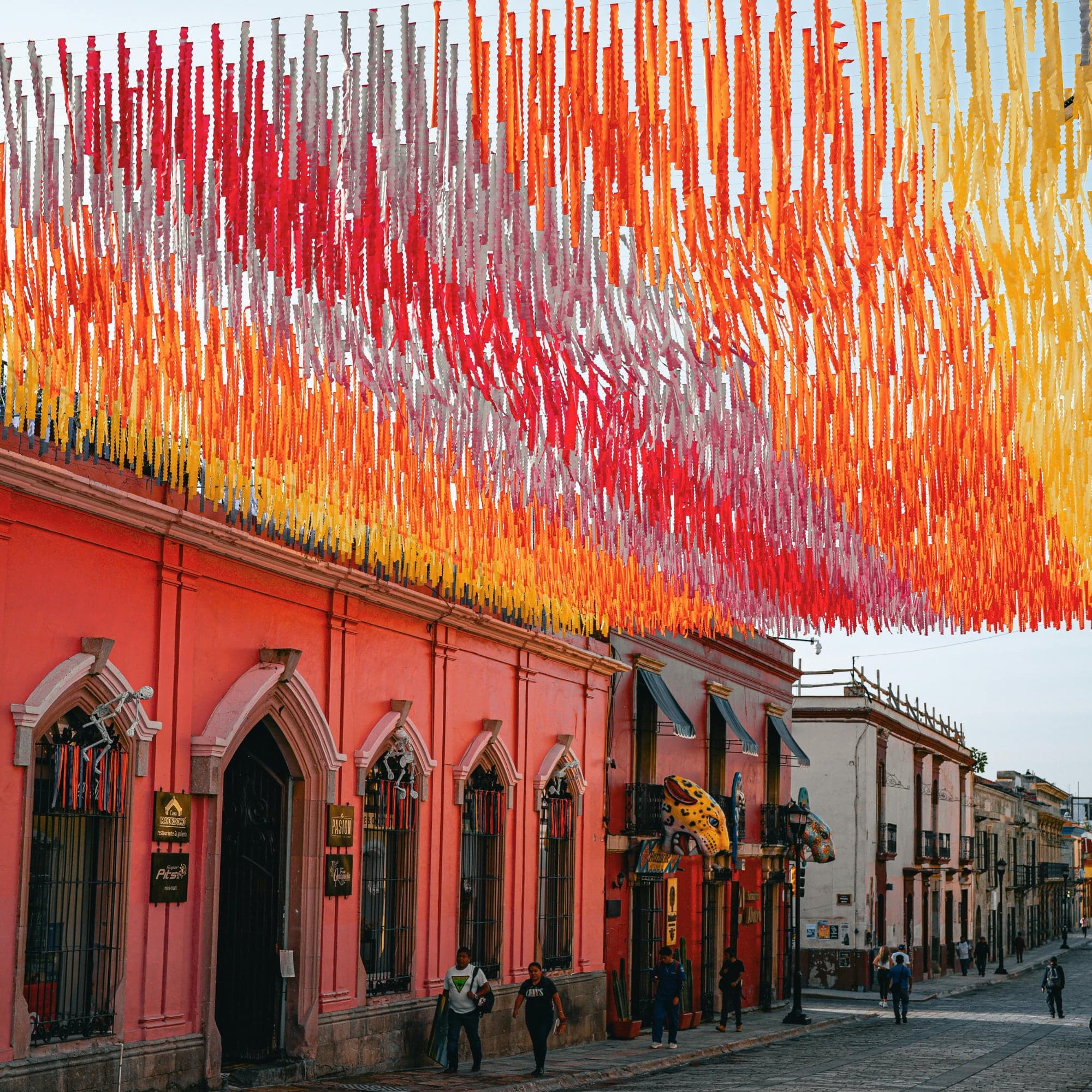
Oaxaca City
A World Heritage historic center and Mexico's culinary capital: markets full of aromas, traditional cooks, chocolate, moles, mezcal bars, galleries and crafts. Gateway to Monte Albán, Mitla and Hierve el Agua.
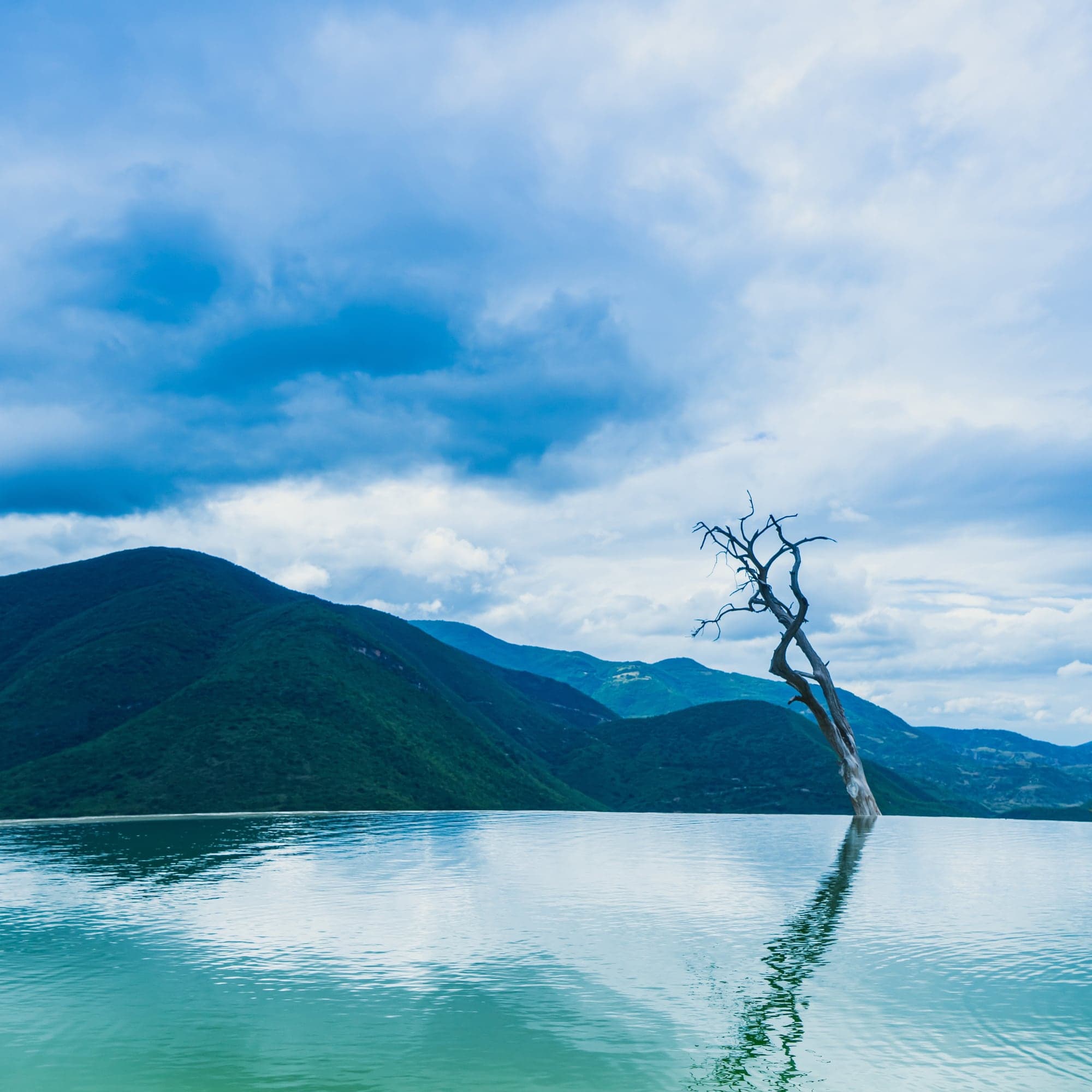
Living tradition, from mezcal to the Pacific
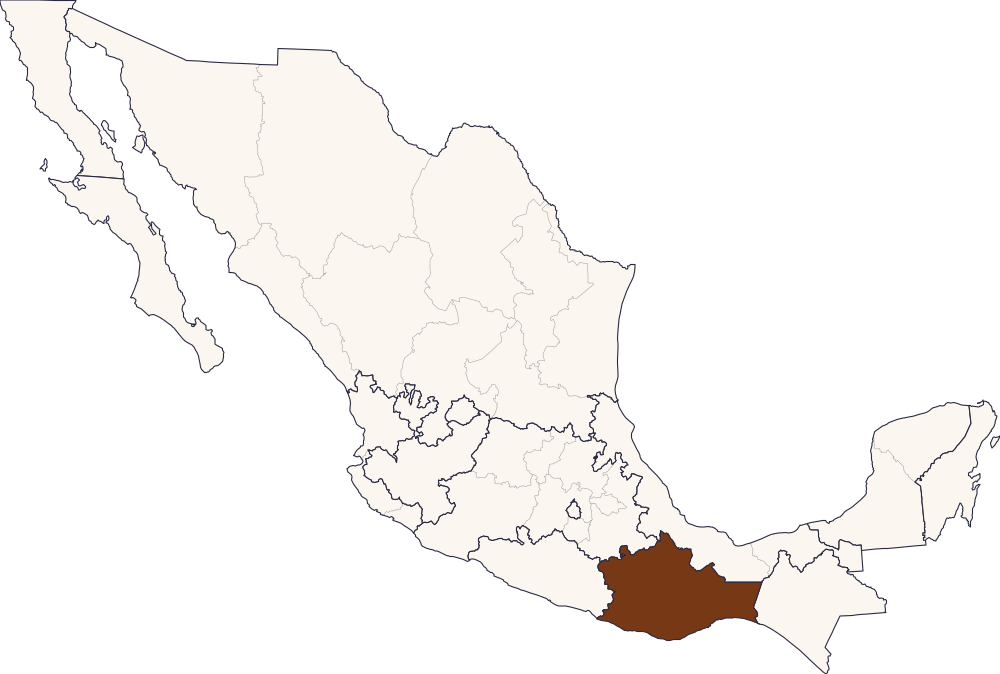
Oaxaca is the soul of Mexico and the land of mezcal. A colonial capital of green cantera stone surrounded by archaeological sites, palenques and artisan villages; one of the world's richest and most celebrated cuisines, the land of the seven moles; the Guelaguetza, the great festival of the Oaxacan peoples; and a wild Pacific coast, with surf beaches, lagoons that glow at night and turtles that come ashore to nest.
A World Heritage historic center and Mexico's culinary capital: markets full of aromas, traditional cooks, chocolate, moles, mezcal bars, galleries and crafts. Gateway to Monte Albán, Mitla and Hierve el Agua.
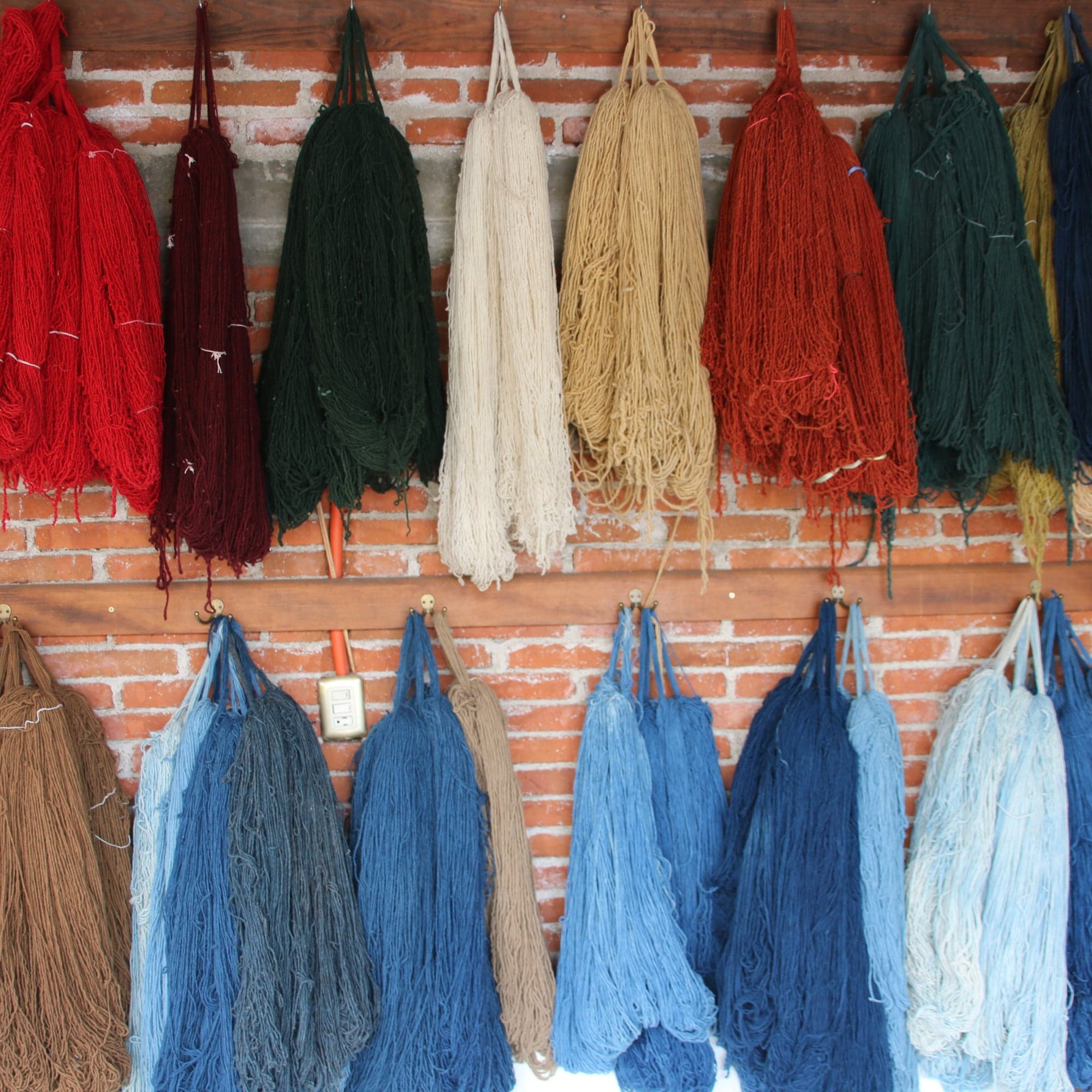
A Zapotec weaving village, world-famous for its wool rugs hand-dyed with cochineal and natural dyes, and for some of the most authentic traditional cooking in the valley.
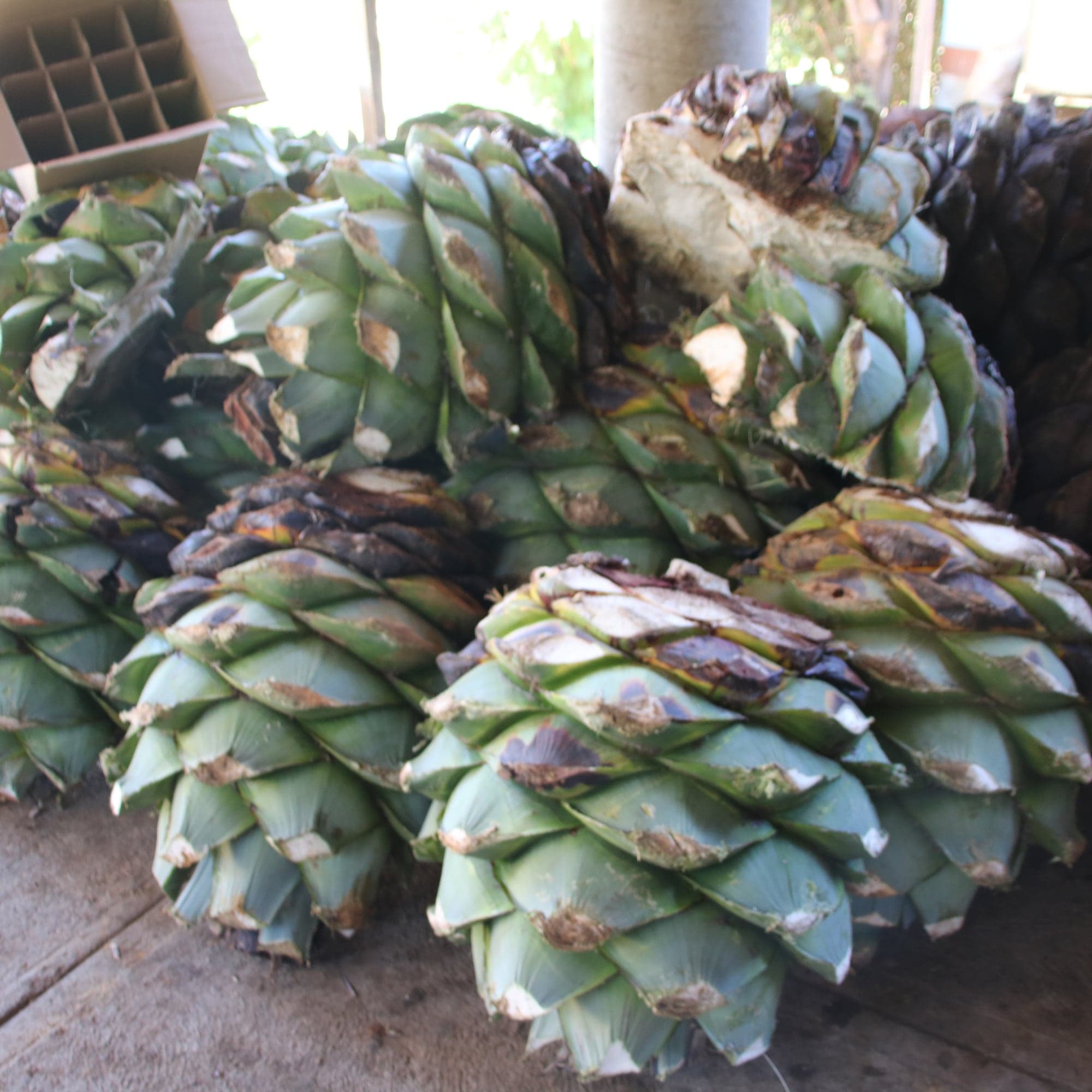
The heart of the mezcal route, surrounded by agave fields and family palenques where master mezcaleros distill as they have for generations.
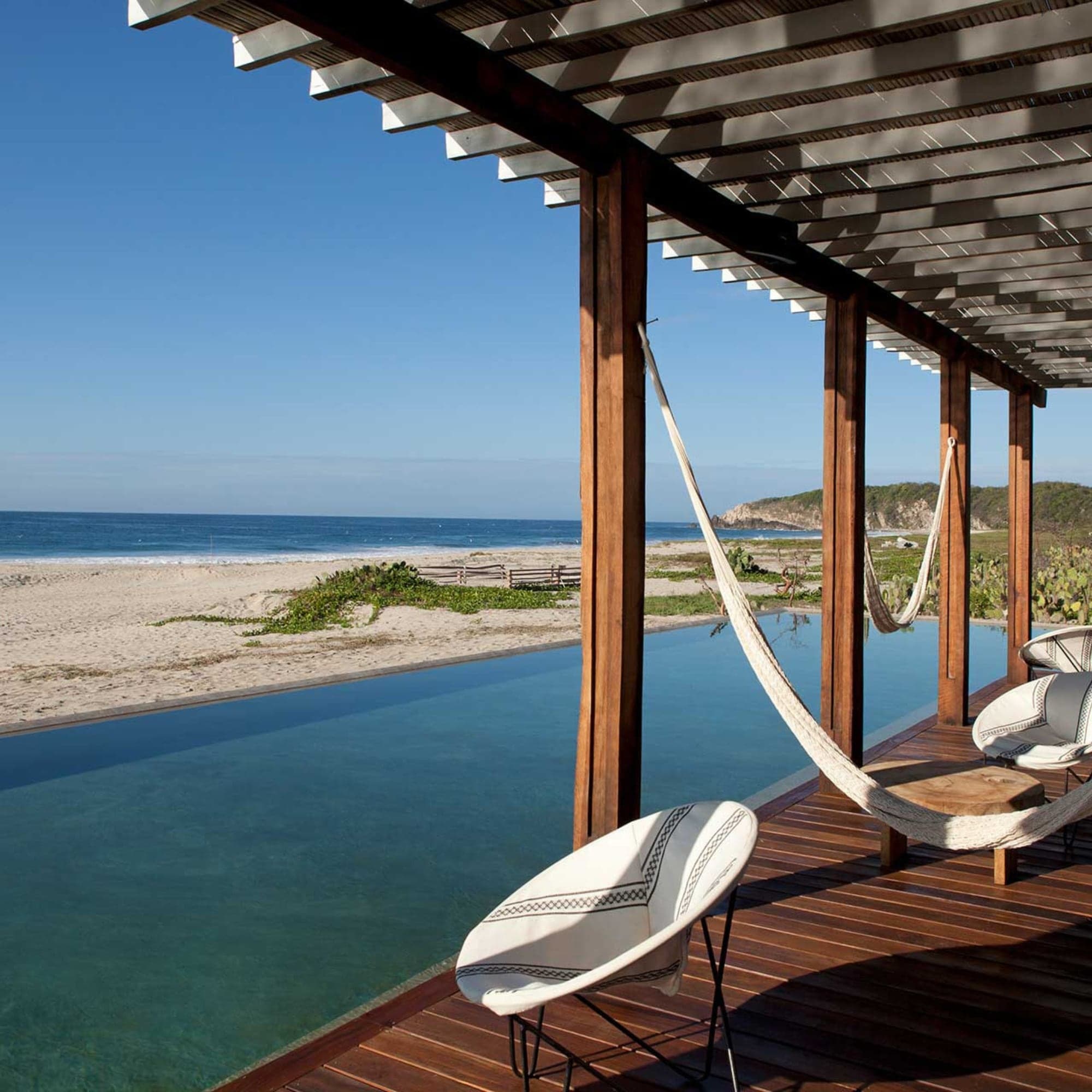
A world-class surf destination at Zicatela beach, with sunsets over the Pacific and a growing food scene.
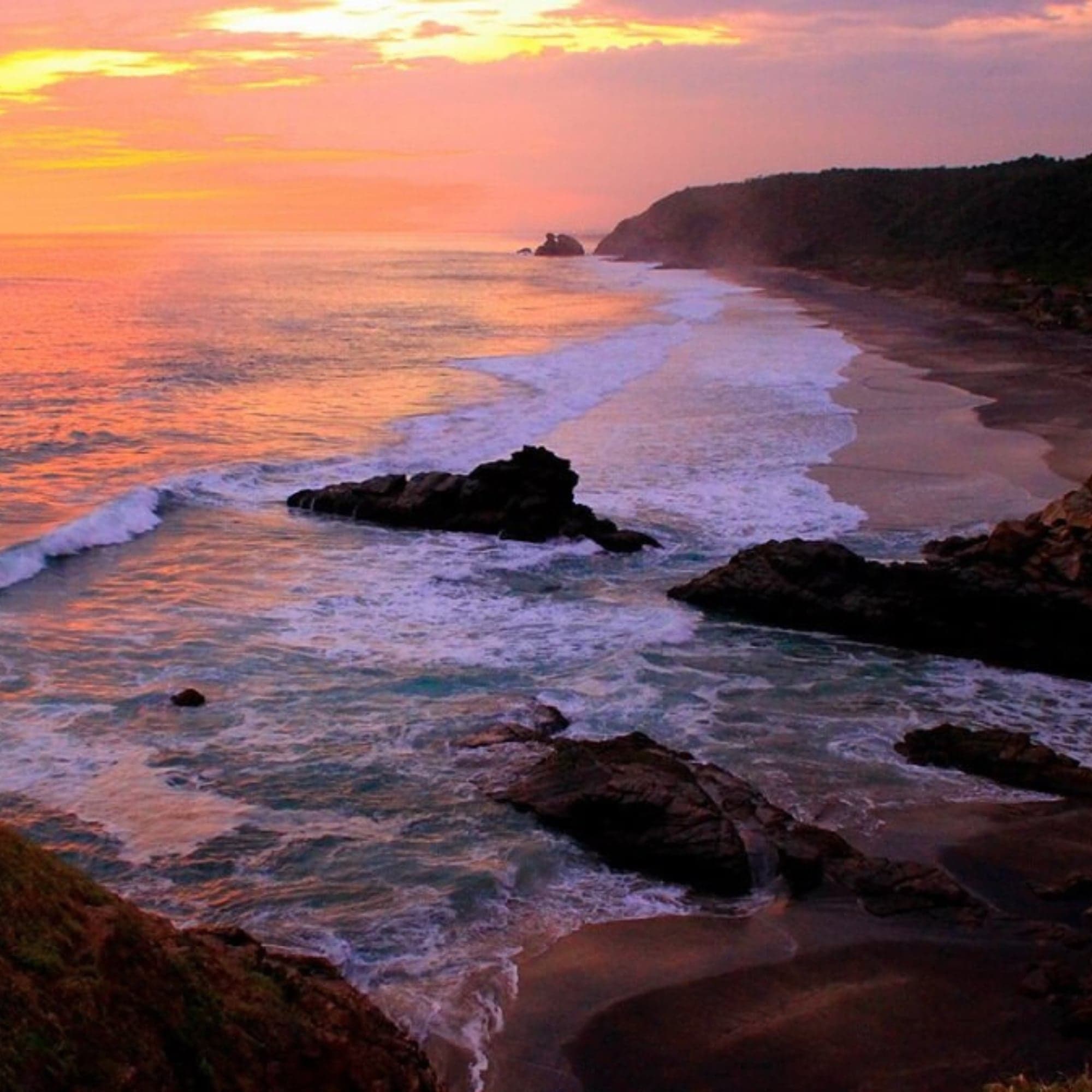
A seaside Pueblo Mágico, home to the Mexican Turtle Center.
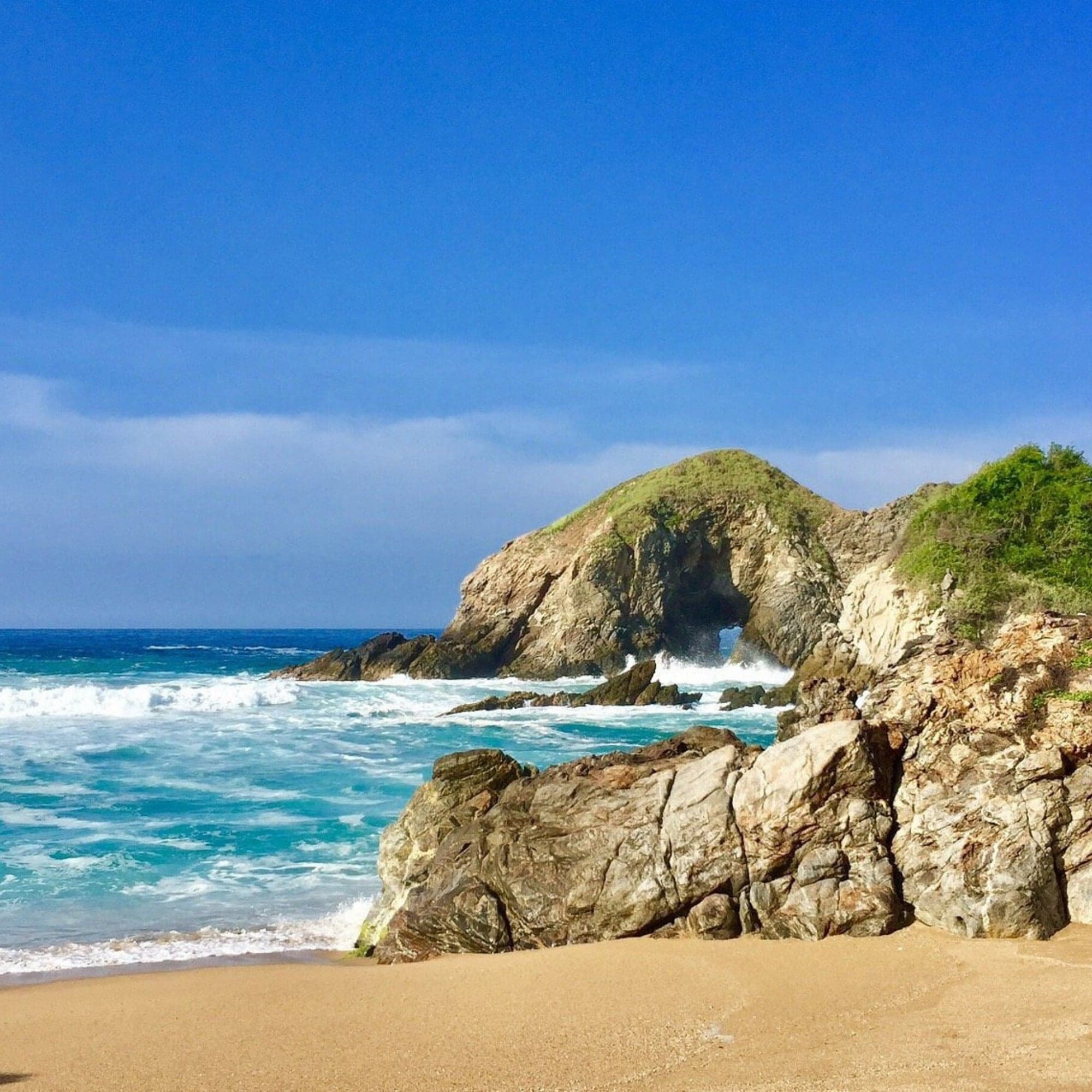
A bohemian, free-spirited beach, one of the most emblematic on the Oaxacan coast.
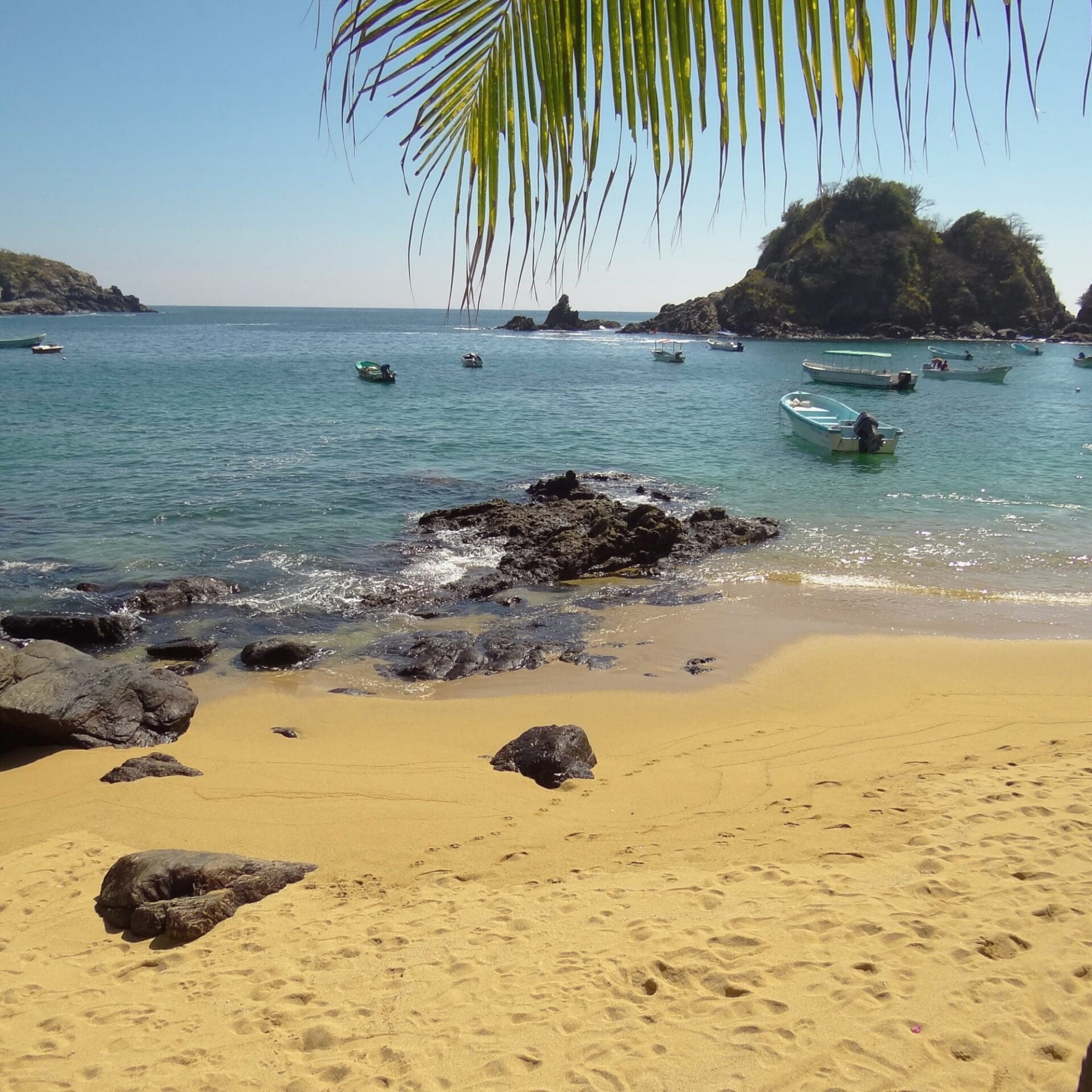
A quiet fishing bay, gateway to hidden beaches and crystal-clear waters.
Oaxaca is the land of mezcal. Private visits to family palenques, walks among agave fields and tastings led by master mezcaleros, from espadín to the rarest wild agaves.
One of the richest culinary traditions in the world: moles, tlayudas, stone-ground chocolate, tamales and the flavors of the markets, guided by traditional cooks and by the chefs who have put Oaxaca on the map.
Workshops with Zapotec weaving families, the natural dyeing process with cochineal and a traditional meal at the home of a local cook.
In Oaxaca City, October to May brings sunny, dry days; from June to September it rains in the afternoons. The coast is warm all year round, with a rainy season from June to October.
Every July, the eight regions of Oaxaca climb Cerro del Fortín to share their dances, their music, their dress and their generosity. It is the great festival of the Oaxacan peoples and one of Mexico's most impressive cultural celebrations. It takes place on the two Mondays following July 16, the Lunes del Cerro, with a full week of festivities, parades and the International Mezcal Fair.
Next edition: July 2027
October 26 – November 3, 2026
Oaxaca
The state's Day of the Dead program in Oaxaca City and the communities of the Central Valleys, with comparsas, visits to marigold fields, altars and candlelit cemeteries. The Gran Comparsa takes place on October 31.
November 1 – 2, 2026
Nationwide
Celebrated throughout Mexico on November 1 and 2, with offerings in homes and visits to cemeteries; it is recognized by UNESCO as Intangible Cultural Heritage.
December 12, 2026
Mexico City · Nationwide
Every December 12, millions of pilgrims arrive at the Basilica of Guadalupe in Mexico City to commemorate the apparition of the Virgin. The celebration includes the midnight Mañanitas on the 11th, masses and Concheros dances in the atrium.
December 18, 2026
Oaxaca
The feast of Oaxaca's patron saint at the Basilica of Our Lady of Solitude, in the city's historic center. It includes mañanitas, calendas, processions, liturgical celebrations and fireworks.
December 23, 2026
Oaxaca
An ephemeral sculpture contest in Oaxaca's Zócalo, where artisans carve radishes and work corn husks and everlasting flowers into Christmas scenes and Oaxacan traditions. It comes with music, buñuelos and fireworks.
March 21 – 28, 2027
Nationwide
The Catholic celebration from Palm Sunday to Easter Sunday, with processions and reenactments throughout Mexico.